
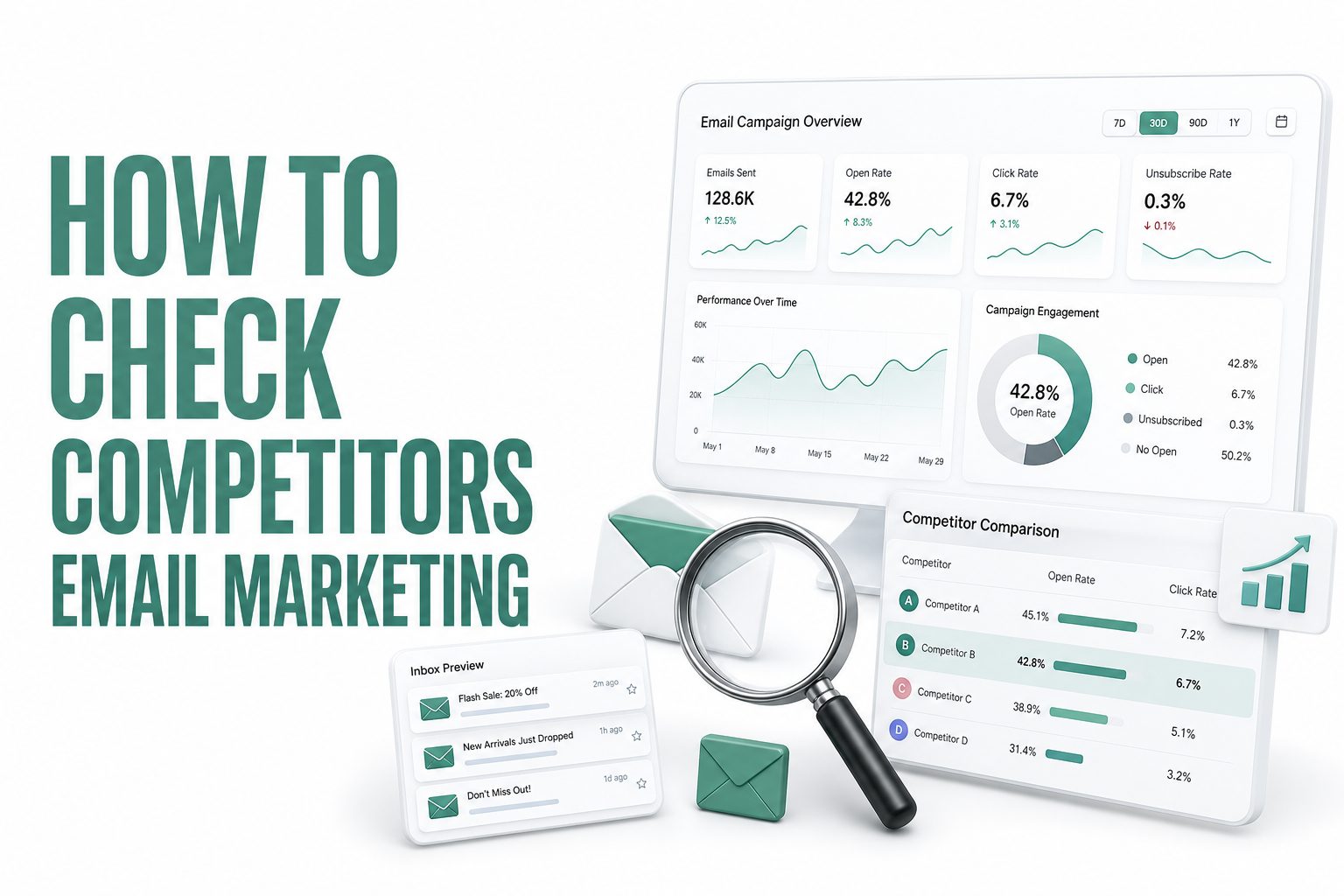
Competitor email research helps you see how similar brands attract attention, build trust, promote offers, and keep subscribers active. It is not about copying their work. It is about reading patterns and making sharper decisions for your own campaigns.
When you study competitor emails, you learn how often they send, what kind of subject lines they use, and which offers they repeat. These details show how they position their products and how they guide readers toward action.
A strong review also protects your brand from guessing. Instead of relying only on trends, you can compare real inbox activity, customer journeys, and campaign timing before improving your own email marketing plan.
Set a Clear Research Goal
Before checking competitor emails, decide what you want to learn. You may want to improve subject lines, welcome emails, sales sequences, product launches, or seasonal campaigns. A clear goal keeps your research focused and useful.
Avoid collecting random screenshots without context. Each email should answer a specific business question. For example, you might track whether competitors use discounts early or wait until subscribers show stronger buying intent.
Your goal also helps you choose the right competitors. A direct competitor may reveal pricing and offer strategies, while an industry leader may show better storytelling, segmentation, and customer retention habits.
Choose the Right Competitors
Start with brands that sell similar products, serve the same audience, or compete for the same search intent. These companies give the most practical email insights because their subscribers likely care about similar problems and buying triggers.
You can also include aspirational competitors. These are larger brands with strong email systems, polished design, and advanced automation. Their campaigns may not match your budget, but their structure can inspire better planning.
Do not track too many brands at once. Five to eight competitors are usually enough for useful research. A smaller list makes it easier to compare subject lines, send timing, calls to action, and offer style.
Build a Competitor Email Swipe File
Create a dedicated inbox only for competitor research. Use one email address for newsletters, product updates, free resources, webinars, and trial signups. This keeps your personal inbox clean and makes campaign tracking easier.
Organize emails by brand, campaign type, date, and funnel stage. A simple spreadsheet can include subject line, preview text, send time, offer, design notes, and call to action. Over time, patterns become easier to spot.
Save screenshots of important emails, especially welcome sequences, launch campaigns, cart reminders, and re-engagement messages. These examples help your team discuss real campaign choices instead of vague opinions.
Useful fields for your swipe file:
- Brand name
- Signup source
- Email date and time
- Subject line
- Preview text
- Main offer
- Call to action
- Design style
- Personalization used
- Landing page linked
Follow Signup Paths Like a Real Customer
Sign up from the same places customers would. Join newsletters from homepages, blog posts, popups, lead magnets, product pages, and checkout forms. Each source may trigger a different email sequence.
Pay attention to the promise made at signup. If a brand offers a guide, discount, or free trial, watch how quickly they deliver it. Delayed or unclear delivery can reveal weaknesses you should avoid.
Track what happens after the first email. Some brands send education first, while others move straight into selling. The order of messages shows how they balance value, trust, urgency, and conversion.
Review Subject Lines and Preview Text
Subject lines reveal how competitors fight for inbox attention. Look for patterns in length, tone, urgency, curiosity, personalization, numbers, and offer language. Good research compares repeated habits, not one standout email.
Preview text matters because it supports the subject line. Many brands waste this space with generic copy. Competitors who use it well often add context, reduce friction, or give readers another reason to open.
Do not judge subject lines only by creativity. A simple subject line can perform well if it matches audience intent. Note which styles appear often, because repeated use usually means the brand sees value in them.
Measure Sending Frequency and Timing
Sending frequency shows how aggressively competitors communicate with subscribers. Some brands send daily during launches and weekly during normal periods. Others use slower educational sequences to protect engagement and trust.
Track send days and times for at least four weeks. You may notice patterns around weekends, payday periods, holidays, or product cycles. These habits can help you plan tests for your own audience.
Frequency alone does not tell the full story. A brand can send often if the content stays useful. Watch whether their emails vary between education, proof, promotion, product updates, and customer stories.
Analyze Email Design and Layout
Competitor email design shows how they guide the reader’s eye. Look at header style, image use, button placement, spacing, mobile readability, and whether the email feels easy to scan.
Some brands rely on polished graphics, while others use plain-text style emails. Neither format is automatically better. The right choice depends on audience expectations, offer complexity, and the relationship between sender and subscriber.
Check whether the design supports the message. A discount email may need a clear product image and bold button, while a founder note may work better with simple formatting and a personal tone.
Study Calls to Action
Calls to action show what competitors want readers to do next. Track whether they push product pages, blog posts, demo bookings, free trials, webinars, reviews, or limited-time offers.
Notice how many CTAs appear in each email. A focused campaign usually has one main action, while newsletters may include multiple links. Too many choices can weaken clicks if the email lacks clear priority.
The CTA copy is also important. Strong buttons use direct language tied to the reader’s next step. Weak buttons often rely on vague words that do not explain what happens after the click.
Common CTA styles to compare:
- Shop the collection
- Start free trial
- Book a demo
- Read the guide
- Claim the offer
- See pricing
- Join the webinar
- Continue checkout
Compare Offers and Promotions
Offers reveal how competitors create buying momentum. Track discounts, bundles, free shipping, bonuses, limited access, loyalty perks, and early-bird deals. These details show how brands reduce hesitation.
Watch how often promotions appear. If a competitor discounts too frequently, they may train subscribers to wait. If they rarely discount, they may rely more on brand value, proof, and product differentiation.
Also review the language around each offer. A strong offer explains value clearly without sounding desperate. The best campaigns make the next step feel reasonable, timely, and useful.
Check Landing Pages Connected to Emails
An email does not work alone. Click the main links and review the landing pages behind them. The page should match the promise, tone, and offer shown in the email.
Look for message consistency. If an email promotes a specific benefit, the landing page should repeat that benefit quickly. A mismatch can reduce trust and lower conversions, even when the email is strong.
You can also compare page speed, layout, proof elements, pricing clarity, and form length. These details show how much friction competitors place between interest and action.
Read our email marketing audit guide for a practical way to compare email content with landing page performance.
Study Automation and Funnel Behavior
Competitor automation becomes visible when you take specific actions. Download a resource, abandon a cart, start a trial, browse products, or stop opening emails for a while. Each action may trigger a different sequence.
Track the timing between messages. Automation timing can reveal whether a brand prioritizes fast conversion, education, objection handling, or retention. The spacing often matters as much as the copy.
Look for behavioral personalization. Some brands mention viewed products, trial activity, location, or past clicks. These signals show how advanced their email system may be and where your own automation can improve.
Welcome Sequences
Welcome emails often show a brand’s core positioning. The first few messages may include the founder story, product benefits, social proof, best sellers, educational content, and a first-purchase offer.
Compare how competitors introduce themselves. Some focus on trust and mission, while others quickly push a sale. The best sequence usually sets expectations and gives subscribers a clear reason to stay engaged.
Retention Emails
Retention emails are sent after purchase, trial signup, or repeated engagement. They may include product tips, refill reminders, loyalty offers, feature education, or customer success stories.
These emails show how competitors increase lifetime value. A strong retention flow does not only sell again; it helps customers get more value from what they already bought or signed up for.
Evaluate Copy Tone and Positioning
Email copy reveals how competitors speak to the market. Note whether they sound friendly, expert, urgent, premium, playful, direct, or educational. Tone often reflects brand strategy more clearly than visual design.
Look at how they describe pain points. Strong brands name customer problems in plain language and connect them to specific outcomes. Weak emails often stay too general and fail to make the reader feel seen.
Positioning also appears in what competitors choose not to say. Some avoid price talk and focus on quality. Others lead with affordability, speed, convenience, or social proof. These choices help you find your own angle.
Track Social Proof and Trust Signals
Social proof can appear as reviews, testimonials, ratings, customer counts, case studies, press mentions, awards, or user-generated content. Track where competitors place these signals in their emails.
Notice whether proof supports the main claim. A testimonial about customer support will not help much if the campaign is selling speed. The best proof removes a specific doubt at the right moment.
Also study how competitors use authority. B2B brands may show client logos and case results, while ecommerce brands may show reviews, photos, and ratings. The format should match the buying decision.
Use Competitor Research Ethically
The goal of competitor research is better judgment, not imitation. Copying subject lines, design, or campaign structure too closely can damage trust and weaken your own brand identity.
Use findings as signals. If several competitors promote one benefit often, the market may care about it. Your job is to communicate your own version with original proof, better clarity, and a sharper customer fit.
Ethical research also means using public signup paths and normal customer experiences. Avoid deceptive access, private data, or anything that crosses legal or professional boundaries.
For a broader planning process, read our competitor analysis tools guide before building your next campaign calendar.
Turn Findings Into Better Campaigns
After collecting competitor emails, summarize the patterns that matter. Group your notes by frequency, offers, subject lines, design, CTAs, automation, and landing page alignment. This makes the research easier to act on.
Choose a few ideas to test, not dozens. You might test a shorter welcome sequence, stronger preview text, better CTA copy, or a new content-to-offer balance. Small tests are easier to measure clearly.
Keep your own customer data at the center. Competitor research can guide ideas, but your open rates, clicks, conversions, unsubscribes, and replies should decide what stays in your email strategy.
Conclusion
Competitor email research gives you a practical view of how brands attract subscribers, build trust, promote offers, and guide readers toward action. The best insights come from steady tracking, not one-time browsing.
A useful process includes choosing the right competitors, joining their lists, saving emails, reviewing subject lines, studying automation, checking landing pages, and comparing offers. Each step helps you make more informed campaign decisions.
The real value of how to check competitors email marketing is not copying what others send. It is learning what the market responds to, then using that insight to build clearer, more original, and more effective emails.
FAQ
Is competitor email research legal?
Yes, when you sign up through public forms and review emails like a normal subscriber. Avoid private systems, hidden data, or misleading access. Keep your research focused on visible campaign strategy and customer experience.
How many competitors should I track?
Track five to eight competitors at first. This gives enough variety without creating too much noise. Include direct competitors, one or two larger brands, and companies with strong email marketing in your niche.
How long should I monitor emails?
Monitor emails for at least four weeks to see normal patterns. For seasonal businesses, track longer across launches, holidays, and sales periods. More time gives better insight into frequency, offers, and automation flow.
Should I copy competitor subject lines?
No. Use competitor subject lines to study tone, structure, and intent. Your own subject lines should match your brand, audience, and offer. Similar ideas are fine, but direct copying weakens originality and trust.
What tools help with email research?
A dedicated inbox, spreadsheet, screenshot tool, and email testing platform are enough to start. Later, you can add analytics tools, deliverability checks, and competitor monitoring software for deeper tracking and reporting.
0 Comments