
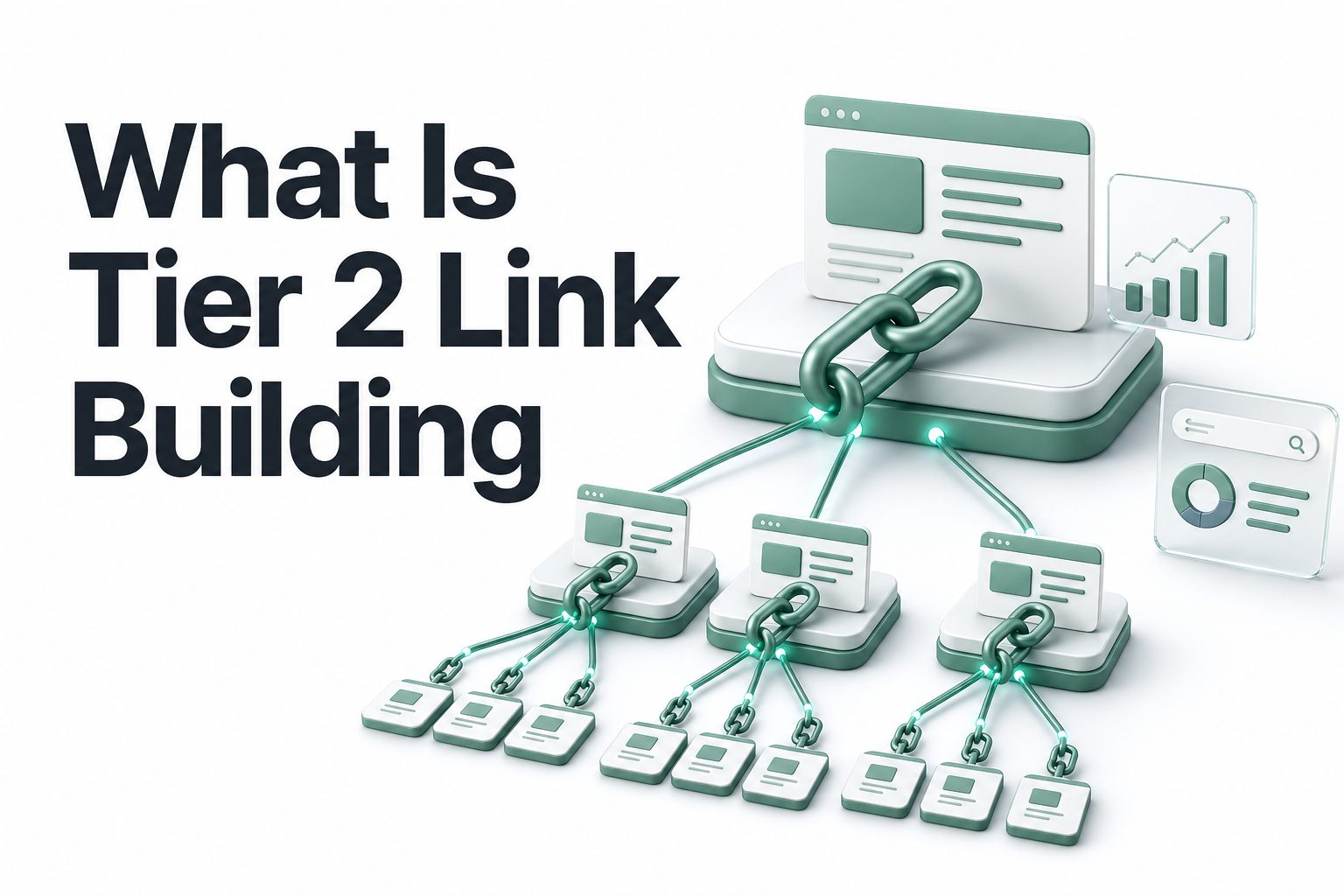
Tier 2 link building is the process of creating backlinks to pages that already link to your website. Instead of pointing every backlink directly at your money pages, you strengthen the authority of your existing first-tier links.
This strategy helps search engines find and value your supporting backlinks more easily. When used carefully, it can improve the strength of guest posts, niche edits, digital PR mentions, resource links, and other quality first-tier placements.
The main goal is not to manipulate rankings with random links. A strong tier 2 strategy supports trusted pages, improves crawl paths, and adds relevance around links that already sit on real, useful, and indexable content.
How Tier 2 Links Fit Into a Link Building Structure
A link building structure usually has multiple layers. Tier 1 links point directly to your website, while tier 2 links point to those tier 1 pages. This creates a support layer around your strongest external mentions.
For example, if a guest post links to your SaaS pricing page, tier 2 links may point to that guest post. These supporting links can come from social profiles, relevant articles, curated lists, or community mentions.
The value comes from strengthening pages that already have contextual relevance. Instead of building weak direct links to your site, you increase the authority and visibility of pages that naturally recommend your content.
Common Tier Structure
Tier 1 links point directly to your website.
Tier 2 links point to your tier 1 backlinks.
Tier 3 links point to your tier 2 backlinks.
Money pages receive authority through stronger first-tier pages.
Supporting links should remain relevant, natural, and crawlable.
The Main Purpose of Tier 2 Link Building
The purpose of tier 2 link building is to make valuable first-tier backlinks more powerful. A good backlink on a trusted website can still perform better when that page receives its own relevant links and traffic signals.
Many first-tier backlinks are published on pages that start with little authority. A guest post, roundup mention, or resource listing may need time and support before search engines treat it as a meaningful recommendation.
Tier 2 links help these pages get crawled, indexed, and evaluated. They also create a wider relevance network around your brand, especially when the supporting content matches the topic of the original backlink.
Difference Between Tier 1 and Tier 2 Links
Tier 1 links carry the highest risk and highest direct value because they point straight to your website. These links must be carefully selected, editorial, relevant, and placed on pages with real user value.
Tier 2 links are one step removed from your website. They support your tier 1 assets, so the risk is usually lower, but quality still matters. Poor tier 2 links can damage the credibility of your backlink structure.
The biggest difference is intent. Tier 1 links should build direct authority and referral value. Tier 2 links should support visibility, indexing, topical relevance, and authority flow toward the pages that already mention your site.
Quality Signals to Check
Relevance between the tier 2 page and tier 1 page.
Indexable content with clean page structure.
Natural anchor text without repeated exact-match phrases.
Real website activity, not abandoned domains.
Organic traffic potential or audience usefulness.
No obvious link farm patterns.
Safe Use Cases for Tier 2 Link Building
Tier 2 link building works best when your tier 1 links are already worth supporting. A strong guest post on a reputable industry blog can benefit from a few relevant mentions, citations, or content references.
Digital PR placements are another good fit. If a journalist mentions your study, guide, or product page, you can promote that article through social sharing, newsletter mentions, content roundups, and related blog references.
Resource pages, expert roundups, podcast features, and case study mentions can also benefit. The key is to support assets that deserve more visibility instead of trying to rescue weak or artificial backlinks.
Risky Tier 2 Link Building Practices
The biggest mistake is treating tier 2 links as a place for low-quality automation. Mass blog comments, spun articles, private network links, and irrelevant profile links can create patterns that search engines may ignore or distrust.
Another risky practice is using the same anchor text repeatedly. If every tier 2 link uses commercial phrases, the structure looks engineered. Natural linking includes branded anchors, page titles, partial phrases, and plain URLs.
Building tier 2 links to poor tier 1 placements is also risky. If the first-tier page is thin, irrelevant, or part of a link-selling network, adding more links only strengthens a weak foundation.
Anchor Text Strategy for Tier 2 Links
Anchor text for tier 2 links should look natural and varied. Since these links point to your tier 1 assets, you can safely use page titles, branded mentions, broad topic phrases, and contextual references.
Avoid forcing exact-match anchors into every supporting link. A natural link profile includes different wording based on sentence flow, source context, and reader intent. This makes the structure more believable and useful.
For example, a tier 2 link to a guest post may use the guest post title, author name, brand mention, or related topic. The anchor should help the reader know why the linked page is relevant.
Useful Anchor Types
Branded anchor text.
Guest post title anchor text.
Partial-match topic phrases.
Plain URL references.
Author or company name mentions.
Natural sentence-based anchors.
Best Sources for Tier 2 Backlinks
The best tier 2 backlinks often come from content that makes editorial sense. These may include supporting blog posts, curated resource lists, social publishing platforms, community discussions, and relevant content syndication channels.
You can also use internal content networks carefully. For example, if you manage multiple legitimate brand properties, you may reference a strong first-tier article from a related educational post or resource page.
Social and community signals can help too. Sharing tier 1 content on LinkedIn, Reddit communities, niche forums, newsletters, and Q&A platforms can increase visibility, referral visits, and crawl discovery without aggressive tactics.
Content Types That Work for Tier 2 Links
Short supporting articles can work well when they expand on a related subtopic. These articles should provide value on their own and link naturally to the tier 1 page as an additional reference.
Content roundups are also useful. If your first-tier backlink appears in a strong guide, you can include that guide in a weekly industry roundup, research list, or recommended reading post.
Repurposed content can support tier 2 activity too. A podcast summary, slide deck, newsletter issue, or social thread can reference the first-tier page when it adds genuine context for the audience.
Tier 2 Link Building Workflow
Start by auditing your existing backlinks. Find tier 1 links from relevant websites, indexed pages, and content that already aligns with your target topics. These are the assets most likely to benefit from extra support.
Next, prioritize links based on value. A backlink from a respected niche publication deserves more attention than a random directory listing. Focus on pages with editorial quality, topical fit, and potential to pass authority.
Then build supporting mentions gradually. Use a mix of content references, social sharing, community citations, and relevant article links. Keep the pace natural and avoid sudden link spikes around one backlink.
Simple Workflow Checklist
Export your current backlink list.
Identify high-quality tier 1 pages.
Check whether those pages are indexed.
Group backlinks by topic and target page.
Create supporting content around related themes.
Use varied anchors and natural placements.
Track indexing, referral traffic, and ranking movement.
Measuring Tier 2 Link Building Results
You can measure tier 2 link building by tracking indexation, link discovery, referral activity, and ranking movement. The first sign of progress is often faster crawling of your important first-tier backlink pages.
Referral traffic can also show value. If tier 2 links bring real visitors to a guest post or media mention, that page may send more engaged users to your website over time.
Ranking changes usually take longer. Since authority passes through another page first, results may appear gradually. Track keyword movement, target page visibility, and the strength of supported backlinks over several weeks or months.
Internal Links and Tier 2 Strategy
Internal links are different from tier 2 links, but both support authority flow. Inside your own site, strong internal linking helps search engines connect related pages, distribute equity, and identify your most important content.
A useful internal resource on white hat link building can help readers compare safer tactics with layered link strategies. This gives your blog a natural path into deeper SEO education without forcing commercial links.
Another internal page about backlink audit strategy can support readers who need to evaluate tier 1 links before adding tier 2 support. This keeps the user journey practical and closely connected to the topic.
Tier 2 Link Building for New Websites
New websites should be careful with tier 2 link building. Before creating layers, the site needs strong content, technical health, relevant landing pages, and a small base of trustworthy first-tier backlinks.
For newer brands, tier 2 links should focus on visibility and indexing rather than aggressive authority building. Sharing guest posts, citing media mentions, and promoting helpful resources can build momentum without creating suspicious patterns.
The safest approach is slow and selective. Support only the best first-tier links, use diverse sources, and make sure every supporting page has a reason to exist beyond passing link value.
Tier 2 Link Building for Established Websites
Established websites can use tier 2 link building more strategically because they often have a larger backlink base. This allows them to identify high-value mentions that deserve extra promotion and support.
For example, a mature site may have dozens of guest posts, podcast appearances, research citations, and partner mentions. Tier 2 links can help the strongest of these assets gain more authority and visibility.
The challenge is prioritization. Not every backlink needs support. Focus on links that point to important pages, sit on trusted domains, and align with topics that already drive business value.
Content Quality in Tier 2 Campaigns
Tier 2 content should not feel like filler. Even though it does not link directly to your website, it still contributes to your brand footprint and may be reviewed by users, editors, or search engines.
Good supporting content has a clear purpose. It may summarize a related idea, recommend a useful resource, cite a guest article, or place a first-tier page within a broader topic conversation.
Thin content creates weak signals. If a tier 2 article exists only to hold a backlink, it may be ignored. Stronger support comes from pages that attract readers, links, shares, or topical relevance.
Common Mistakes in Tier 2 Link Building
One common mistake is building too many links too quickly. A sudden wave of low-quality links to one guest post can look unnatural, especially if the page had little activity before.
Another mistake is ignoring relevance. A tier 2 link from an unrelated page may add little value. Search engines evaluate context, so a link from a related discussion is usually stronger than a random placement.
Many teams also forget to track results. Without monitoring indexation, rankings, and backlink quality, tier 2 campaigns become guesswork. A simple tracking sheet can show which supported links are actually helping performance.
Practical Quality Control
Review every tier 1 page before supporting it.
Avoid tier 2 links from spam-heavy websites.
Keep anchor text varied and natural.
Build links gradually over time.
Monitor supported pages in SEO tools.
Remove or ignore tactics that produce no value.
White Hat Approach to Tier 2 Links
A white hat approach treats tier 2 link building as content promotion. Instead of manufacturing signals, you promote useful first-tier pages through channels where the audience may genuinely care about the topic.
This can include newsletter mentions, expert commentary, social posts, relevant blog references, and content partnerships. The link exists because the supported page adds context, not because the campaign needs another placement.
This approach may be slower, but it is more durable. Search engines keep improving their ability to ignore weak links, so quality, relevance, and editorial context matter more than raw link volume.
Conclusion
Tier 2 link building is a support strategy that strengthens valuable backlinks already pointing to your website. It works best when the first-tier links are relevant, editorial, and placed on pages worth promoting.
The safest campaigns focus on quality sources, natural anchors, useful content, and steady growth. Weak automation, irrelevant placements, and repeated commercial anchors can reduce trust and create unnecessary SEO risk.
In simple terms, what is tier 2 link building means building links to your existing backlinks so those pages gain more visibility, authority, and crawl value. Used carefully, it can support long-term organic growth.
FAQ
Is tier 2 link building safe?
Tier 2 link building is safe when it supports high-quality first-tier links with relevant and natural placements. It becomes risky when teams use spammy automation, irrelevant sources, repeated anchor text, or links built only for manipulation.
How many tier 2 links are needed?
There is no fixed number. A strong guest post may need only a few relevant supporting links, while a major PR feature may benefit from broader promotion. Quality and relevance matter more than link count.
Can tier 2 links improve rankings?
Tier 2 links can help rankings indirectly by strengthening pages that already link to your website. They may improve crawl discovery, authority flow, and visibility, but results depend on the quality of both tiers.
Should tier 2 links point to all backlinks?
No. Tier 2 links should support only valuable first-tier backlinks. Focus on relevant guest posts, editorial mentions, research citations, and trusted resource pages. Weak or unrelated backlinks usually do not deserve extra support.
What is the best anchor text for tier 2 links?
The best anchor text is natural and varied. Use branded phrases, page titles, partial topic phrases, author names, and plain URLs. Avoid repeating exact-match commercial anchors because that can make the link pattern look forced.
0 Comments